
Theory
Introduction:
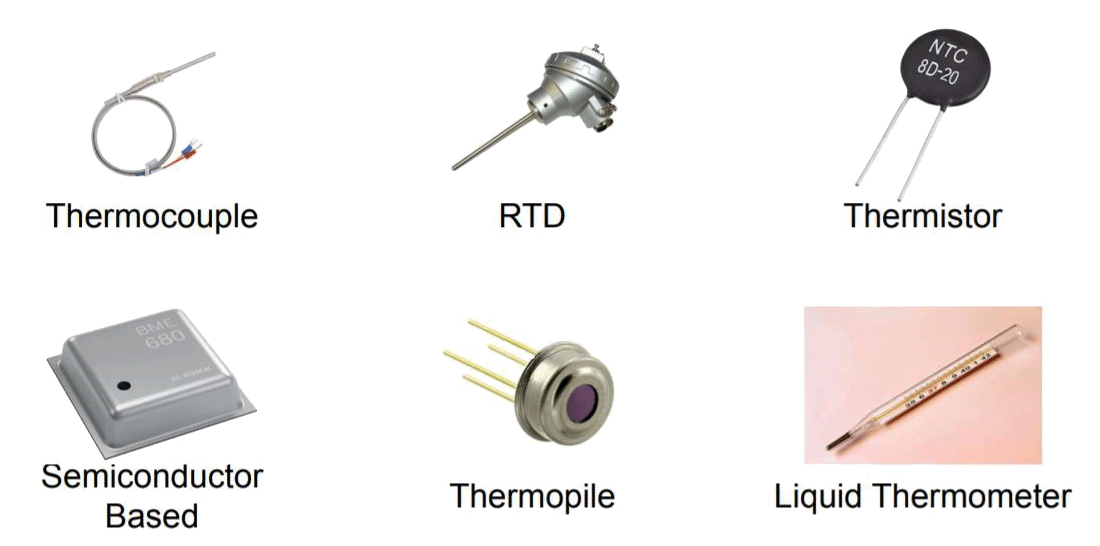
Temperature sensors are crucial components utilized across industries for monitoring temperature variations in diverse environments. Operating on principles like resistance, voltage, or thermoelectric effects, these sensors convert temperature changes into electrical signals. Common types include thermocouples, thermistors, RTDs, and IC temperature sensors like the LM35. They find applications in automotive, aerospace, healthcare, consumer electronics, and industrial automation. Interfacing with microcontrollers such as Arduino or Raspberry Pi enables temperature monitoring, control, and data logging. Calibration ensures accuracy, while environmental considerations influence sensor selection for optimal performance.
Types of Temperature Sensors:
There are several types of temperature sensors available, each with its own advantages and applications:
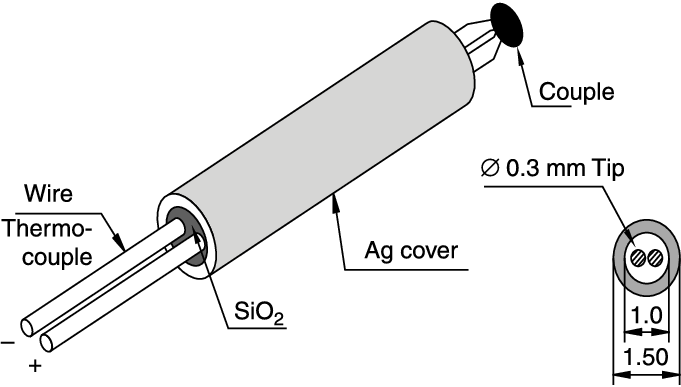
1.Thermocouples:
Thermocouples stand as stalwarts among temperature sensing technologies, renowned for their ruggedness and unparalleled versatility across a vast temperature spectrum. At their core, these devices embody a simple yet ingenious principle: the utilization of two dissimilar metals conjoined at one end to harness the phenomenon of thermoelectricity. This unique configuration sets the stage for a remarkable interplay of thermal and electrical phenomena, culminating in the generation of a voltage signal directly proportional to the temperature gradient experienced by the thermocouple. The key to the thermocouple's functionality lies in the fundamental principles of thermoelectricity, wherein a temperature gradient between two junctions of dissimilar metals induces a flow of electrons, creating a potential difference—termed the Seebeck effect. The magnitude of this potential difference is intricately linked to the temperature differential across the junctions, providing a direct means of temperature measurement.
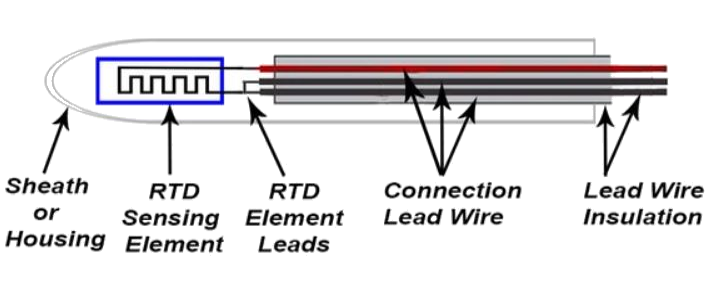
2.Resistance Temperature Detectors (RTDs):
Resistance Temperature Detectors (RTDs) stand as beacons of precision in the realm of temperature sensing, harnessing the elegant principle of electrical resistance to deliver unparalleled accuracy in temperature measurement. At their core, RTDs rely on the fundamental relationship between electrical resistance and temperature, a phenomenon that forms the cornerstone of their operation. Unlike thermocouples, which generate a voltage signal proportional to temperature, RTDs exploit the predictable and reproducible changes in electrical resistance exhibited by certain materials as temperature fluctuates. Platinum, renowned for its stability, linearity, and resistance to corrosion, emerges as the material of choice for most RTD applications. The use of platinum ensures not only exceptional accuracy but also resistance to the ravages of time and environmental factors, making RTDs a preferred solution for applications demanding long-term stability and reliability. The operating principle of an RTD is elegantly simple: as temperature rises, the electrical resistance of the platinum element increases in a predictable and linear fashion. By measuring this change in resistance with high precision, RTDs afford a direct and reliable means of determining temperature with exceptional accuracy.
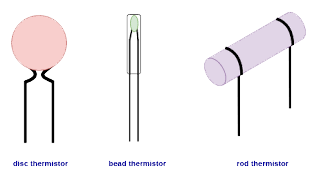
3.Thermistors:
Thermistors represent a sophisticated fusion of semiconductor technology and temperature sensing prowess, offering unparalleled sensitivity and responsiveness to temperature fluctuations. These miniature marvels exhibit a unique characteristic: a resistance that undergoes significant variation in response to changes in temperature. It is this inherent property that renders thermistors indispensable in applications where the detection of even the subtlest temperature changes is paramount. At the heart of a thermistor lies a semiconductor material—typically composed of metal oxides such as manganese, nickel, or cobalt—whose electrical resistance exhibits a pronounced and nonlinear dependence on temperature. Unlike the linear response of Resistance Temperature Detectors (RTDs), the resistance of a thermistor undergoes exponential changes with temperature variations, rendering them highly sensitive to temperature fluctuations within a narrow range. One of the most compelling features of thermistors is their exceptional sensitivity to temperature changes, far surpassing that of many other temperature sensing technologies. This heightened sensitivity makes thermistors particularly well-suited for applications where precise temperature control or detection of small temperature differentials is critical.
4.Integrated Circuit (IC) Temperature Sensors:
Integrated Circuit (IC) temperature sensors epitomize the marriage of advanced semiconductor technology with the art of temperature sensing, offering a compact and versatile solution for a wide array of applications. Unlike traditional temperature sensors, which often rely on discrete components and external circuitry, IC temperature sensors encapsulate the entire sensing and signal conditioning circuitry within a single integrated package. This integration not only reduces the complexity of the sensor but also enhances its performance and ease of use. At the heart of an IC temperature sensor lies a semiconductor-based sensing element, typically a diode or a transistor, whose electrical characteristics vary predictably with changes in temperature. By leveraging the inherent properties of semiconductor materials, IC temperature sensors are able to convert temperature variations into electrical signals with remarkable precision and accuracy. One of the most compelling advantages of IC temperature sensors is their small size and low profile, which makes them ideally suited for applications where space is at a premium.
The LM35 Temperature Sensor:
What is a LM35 Temperature Sensor?
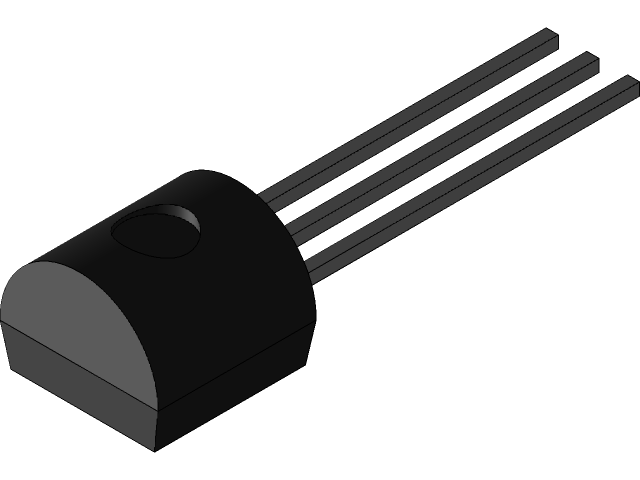
The LM35 is a temperature sensor chip created by Texas Instruments. It's a tiny electronic component that's designed to measure temperature very precisely. Inside the LM35, there's a special material that changes its electrical properties as the temperature changes. When the temperature increases, so does the electrical voltage it produces. The LM35 is programmed to give out 10 millivolts of voltage for every degree Celsius the temperature rises. So, if the temperature goes up by 1 degree Celsius, the LM35 will give out 10 millivolts more voltage. This linear relationship between temperature and voltage makes it really easy to use with other electronic devices like microcontrollers or computers. You can simply measure the voltage output of the LM35 and convert it back into temperature readings in Celsius using a simple calculation.
Applications of the LM35:
LM35 come in various types, each tailored to specific applications to ensure optimal performance and functionality. Here's an in-depth look at the different types:
1. Temperature Monitoring: Linear potentiometers have a consistent, linear relationship between the position of the wiper and the resistance along the resistive element. This means that as the wiper moves linearly along the track, the resistance changes proportionally. Linear potentiometers are commonly used in applications where a direct, linear relationship between the control input and the output signal is desired. One prominent example is volume knobs in audio equipment, where users expect a linear increase or decrease in volume with the rotation of the knob.
2. Temperature Control: Logarithmic potentiometers, also known as "log pots" or "audio taper" pots, feature a logarithmic taper that mimics the logarithmic response of the human ear to changes in volume. In other words, the resistance changes logarithmically with the position of the wiper, providing a more natural and intuitive control over audio volume. Logarithmic potentiometers are widely used in audio applications, such as amplifiers, mixing consoles, and musical instruments, where achieving smooth and perceptually balanced volume control is essential.
3. Medical Devices:: Multi-turn potentiometers offer finer control over resistance by requiring multiple rotations to cover their full range. Unlike standard potentiometers that typically require only a single rotation, multi-turn potentiometers allow users to make precise adjustments with greater resolution. This makes them ideal for applications that demand high precision, such as instrumentation, calibration equipment, and scientific instruments. By requiring multiple rotations, multi-turn potentiometers enable users to make incremental changes with accuracy, ensuring precise control over the circuit parameters.
4. Consumer Electronics:: Multi-turn potentiometers offer finer control over resistance by requiring multiple rotations to cover their full range. Unlike standard potentiometers that typically require only a single rotation, multi-turn potentiometers allow users to make precise adjustments with greater resolution. This makes them ideal for applications that demand high precision, such as instrumentation, calibration equipment, and scientific instruments. By requiring multiple rotations, multi-turn potentiometers enable users to make incremental changes with accuracy, ensuring precise control over the circuit parameters.
LCD (Liquid Crystal Display) modules:
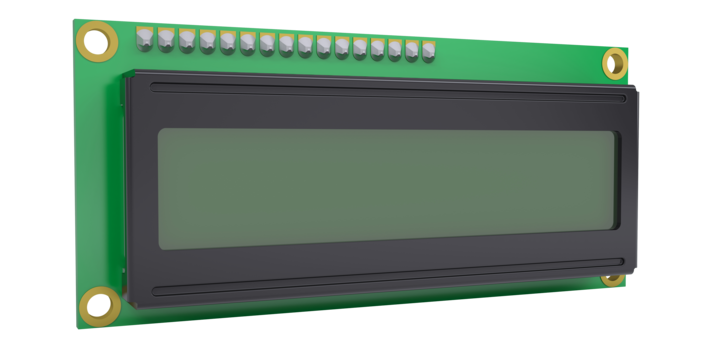
LCD display modules consist of an array of liquid crystal cells sandwiched between two transparent electrodes and two polarizing filters. These cells manipulate light passing through them, creating patterns and images visible to the human eye. By applying electrical signals to specific segments of the display, users can control which portions of the screen are illuminated, allowing for the presentation of text, numbers, symbols, and graphical elements.
Features of LCD Display Modules:
1. High Contrast and Clarity: LCDs utilize liquid crystals to modulate light, resulting in high contrast ratios and sharp image quality. This ensures that text, graphics, and images are displayed with exceptional clarity and readability, even in varying lighting conditions. The ability of LCDs to maintain contrast and clarity makes them suitable for a wide range of applications, from indoor settings with controlled lighting to outdoor environments with bright sunlight.
2. Low Power Consumption: LCD display modules are renowned for their energy efficiency, consuming minimal power compared to alternative display technologies such as cathode-ray tubes (CRTs) or light-emitting diodes (LEDs). This low power consumption makes LCDs ideal for battery-powered devices, portable electronics, and applications where energy efficiency is a primary concern. It prolongs battery life, reduces operating costs, and minimizes environmental impact.
3. Compact Size: LCD modules are available in a diverse range of sizes, spanning from small character displays with a few segments to large graphical displays capable of showcasing complex images and animations. Despite their varying sizes, LCDs maintain a compact form factor, allowing for seamless integration into electronic devices with limited space constraints. This versatility enables designers to meet diverse application requirements without sacrificing aesthetics or functionality.
4. Wide Viewing Angles: Many LCDs feature wide viewing angles, ensuring that information remains legible and clear when viewed from different perspectives. Wide viewing angles eliminate distortion and color shifts, enabling users to interact with LCD displays comfortably from various positions and angles. This feature enhances usability and accessibility in applications where multiple users or observers may need to view the display simultaneously.
Applications of LCD Display Modules:
1.Consumer Electronics: LCDs serve as integral components in a wide range of consumer electronics, including smartphones, tablets, laptops, televisions, and digital cameras. These devices rely on LCDs to provide users with vibrant and visually engaging displays for interacting with digital content, such as watching videos, browsing the internet, playing games, or viewing photos. The high resolution, color accuracy, and responsiveness of LCDs enhance the user experience, enabling seamless navigation, immersive multimedia playback, and crisp image rendering across various consumer electronic devices.
2. Industrial Control Systems: LCD display modules play a crucial role in industrial automation, process control, and instrumentation applications. They serve as Human-Machine Interfaces (HMIs) for monitoring and controlling complex systems, providing operators with real-time data visualization and control capabilities. In industrial environments, LCDs facilitate intuitive interaction with machinery, enabling operators to monitor production processes, adjust parameters, and troubleshoot issues efficiently. Their high reliability, durability, and resistance to environmental factors make them well-suited for demanding industrial settings.
3. Medical Devices: LCDs are extensively employed in various medical equipment and devices, including patient monitors, diagnostic devices, and infusion pumps. They serve as primary interfaces for healthcare professionals, providing vital information for patient care and treatment. In patient monitors, LCDs display real-time physiological data such as heart rate, blood pressure, and oxygen saturation levels, enabling healthcare providers to assess patient status and make informed decisions. In diagnostic devices, LCDs present imaging results, test readings, and diagnostic information, aiding in disease diagnosis and treatment planning.
4. Automotive Applications: LCDs are prominently featured in automotive applications, including vehicle dashboards, navigation systems, infotainment consoles, and heads-up displays (HUDs). They enhance driver visibility and interaction with vehicle systems, contributing to a safer and more enjoyable driving experience. In vehicle dashboards, LCDs display essential driving information such as speed, fuel level, engine status, and navigation directions. In navigation systems, LCDs provide visual maps, route guidance, and points of interest information. In infotainment consoles, LCDs enable multimedia playback, smartphone integration, and hands-free communication. In heads-up displays (HUDs), LCDs project critical information directly onto the windshield, minimizing driver distraction and improving situational awareness.
5. Home Appliances: LCDs are integrated into various home appliances to provide users with intuitive interfaces for programming settings and monitoring operations. They enhance user convenience and accessibility, enabling effortless control and customization of appliance functions. In refrigerators, LCDs display temperature settings, food inventory, and energy usage data, allowing users to optimize storage conditions and reduce energy consumption. In washing machines, LCDs present wash cycle options, wash progress status, and error messages, facilitating efficient laundry management. In microwave ovens, LCDs provide cooking presets, timer settings, and cooking status updates, ensuring precise and convenient cooking experiences for users.
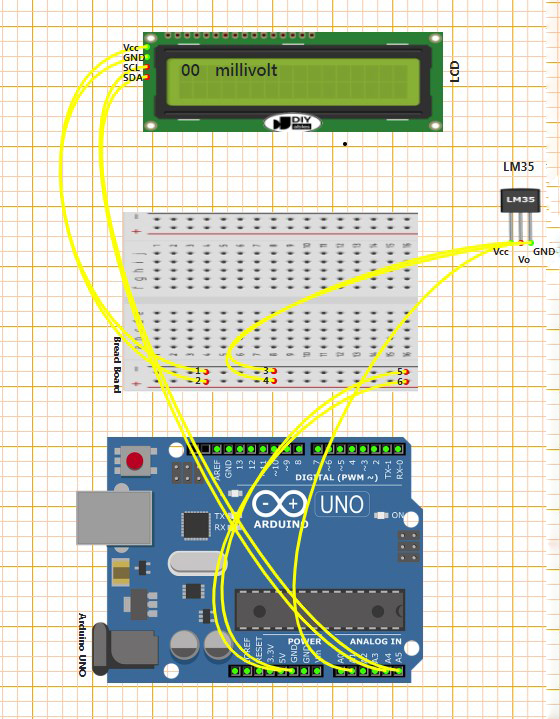
Circuit for Interfacing of temperature sensor LM35 with Arduino:
Working of the Circuit:
1. In the setup() function:
• pinMode(buzzer, OUTPUT);
configures the buzzer pin (Pin 11) as an output pin, indicating that it will be used to send signals to the buzzer.
2. In the loop() function:
• tone(buzzer, 1000);
generates a tone of 1000 Hz on the buzzer Pin, causing the buzzer to produce a sound.
• delay(15);
pauses the program execution for 15 milliseconds, during which the tone continues to play.
• noTone(buzzer);
stops the tone on the buzzer Pin, silencing the buzzer.
• delay(15);
introduces another delay of 15 milliseconds before the next iteration of the loop.
Therefore, the code continuously generates a 1000 Hz tone on the buzzer pin for 15 milliseconds, followed by a silent period of 15 milliseconds, resulting in a pulsating sound from the buzzer. This pulsating sound will repeat as long as the Arduino is powered on and running the program.