
Theory
Introduction:
LEDs:
Light-Emitting Diodes (LEDs) function as semiconductor devices that emit light when an electric current flows through them. Their construction involves a semiconductor chip doped with impurities to create a p-n junction. When voltage is applied across the junction, electrons and electron holes combine, releasing energy in the form of photons, which produce light. Unlike traditional incandescent bulbs, LEDs do not rely on heating a filament to generate light, resulting in significantly higher energy efficiency. Moreover, their solid-state construction enhances durability and resistance to environmental factors such as shock and vibration. LEDs offer instantaneous illumination, directionality, and a wide range of color options, making them ideal for various applications, including lighting, displays, and indicators.
Principle of Operation of LEDs:
The operation of a Light-Emitting Diode (LED) relies on the interaction between semiconductor materials within its structure, typically comprising two layers: N-type and P-type. In the N-type layer, abundant free electrons exist, while the P-type layer contains 'holes', or areas with an absence of electrons. When a voltage is applied across the LED, electrons from the N-type region migrate towards the P-type region due to the electric field. As electrons move, they recombine with holes in the P-type layer, releasing energy in the form of photons. This energy release manifests as visible light, with the color determined by the wavelength of the emitted photons. By engineering the semiconductor materials and controlling the applied voltage, manufacturers can tailor LEDs to emit light of specific colors and characteristics, making them versatile and efficient sources of illumination in various applications.
RGB LEDs:
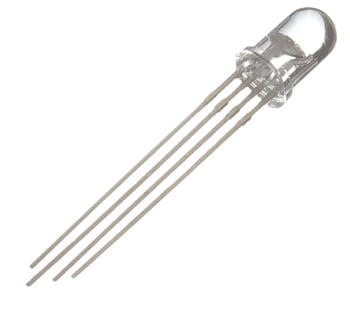
RGB LEDs incorporate three distinct LED chips—Red, Green, and Blue—within a single package. Each chip emits light of a specific primary color when electrically stimulated. By controlling the intensity of each chip, RGB LEDs can blend these primary colors to produce a vast array of hues across the visible spectrum. This construction enables them to create dynamic and multicolored lighting effects, making them invaluable in applications such as signage, architectural lighting, and entertainment. Through precise control of the individual LEDs, RGB setups offer endless possibilities for customized and immersive lighting experiences, revolutionizing the way light is utilized for aesthetic and functional purposes.
Color Production by RGB LED:
The generation of different colors with RGB LEDs involves adjusting the intensity of each constituent LED. By modulating the voltage or current supplied to individual LEDs, users can control the brightness and hue emitted. For instance:
• Emitting pure blue light necessitates maximizing the intensity of the blue LED while minimizing the contributions from the green and red LEDs.
• A balanced combination of red, green, and blue light results in white illumination.
• Intermediate colors are achievable by varying the relative intensities of the primary LEDs.
Mixing Colors:
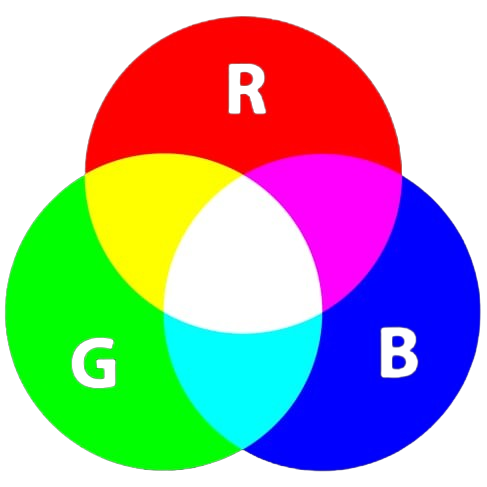
In RGB LEDs, colors are synthesized through a process known as additive color mixing. This means that varying intensities of the primary colors—Red, Green, and Blue—are combined to create secondary and tertiary hues. When these primary colors are mixed together in different proportions, they stimulate the cone cells in the human eye with varying wavelengths of light. The brain then interprets these signals to perceive a specific resultant color. For instance, mixing red and green light produces yellow, while combining blue and green light creates cyan. The multitude of color possibilities achievable through different combinations of primary LEDs is often visualized using a color mixing chart. This chart helps designers and users understand how to adjust the intensity of each primary color to achieve the desired color output accurately. Overall, additive color mixing in RGB LEDs provides a flexible and versatile method for creating a wide range of vibrant and dynamic colors in lighting applications.
Common Anode and Common Cathode LEDs
Two configurations of RGB LEDs exist:
• Common Anode and
• Common Cathode
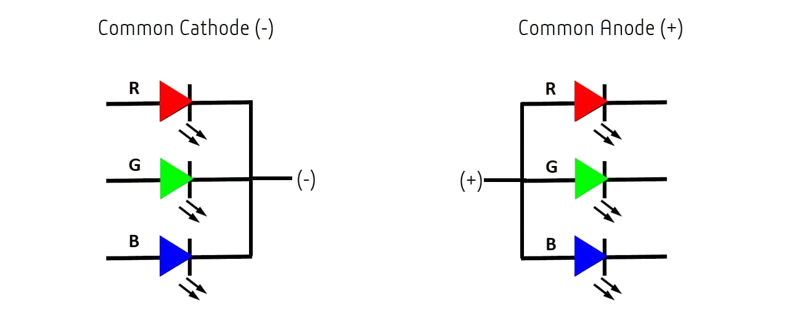
In a Common Cathode RGB LED, all three individual LEDs (Red, Green, and Blue) share a common negative connection, also known as the cathode. Conversely, in a Common Anode RGB LED, these LEDs share a common positive connection, known as the anode. The choice between common cathode and common anode configurations depends on the specific requirements of the circuit or application.
Distinguishing between these configurations is essential during circuit assembly to ensure proper connection and functionality. This can be achieved using a multimeter in continuity mode, where the multimeter's probes are used to test for connectivity between the LED pins and identify the common connection.
Understanding the configuration of RGB LEDs is crucial for designing and implementing circuits effectively. It determines how the LEDs are connected to power sources and control signals, ultimately influencing the behavior and performance of the lighting system. Whether using common cathode or common anode RGB LEDs, proper identification and wiring are necessary for successful integration into electronic circuits and lighting designs.
RGB LED Pins:
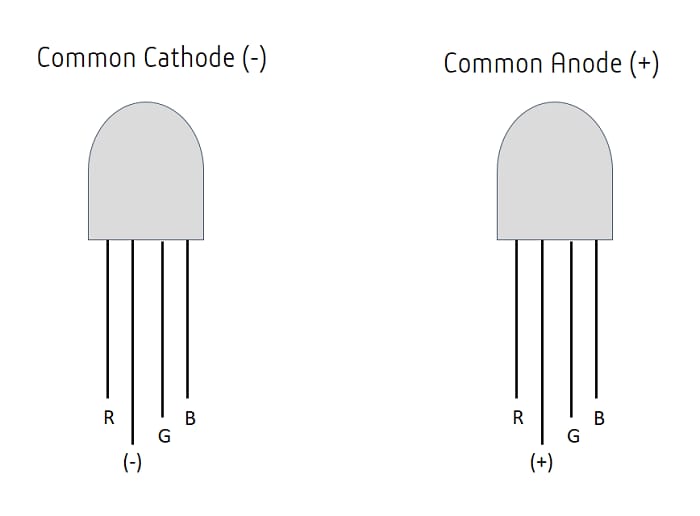
RGB LEDs typically feature four leads, with one lead dedicated to each of the primary LEDs (Red, Green, Blue), and an additional lead for the common connection. In the case of a common anode RGB LED, the common lead is connected to the anode, while in a common cathode RGB LED, it is connected to the cathode. The common lead is often longer than the other leads, serving as a visual indicator for pin identification during circuit integration. This length discrepancy simplifies the process of correctly orienting and connecting the RGB LED within a circuit, reducing the risk of incorrect wiring and potential damage to the LED or other components. Additionally, the arrangement of the leads allows for straightforward implementation of control signals and power connections, facilitating the creation of vibrant and dynamic lighting effects in various applications such as signage, architectural lighting, and decorative lighting.
Applications of RGB LED:
RGB LEDs (Red, Green, Blue) have a wide range of applications due to their ability to produce a variety of colors by mixing different intensities of the three primary colors. Some common applications include:
1. Indoor and Outdoor Illumination: In addition to their decorative purposes, RGB LEDs are also used for functional lighting. For instance, they can be used in fixtures like strip lights or floodlights to provide energy-efficient illumination for both indoor and outdoor environments.
2. Entertainment and Events: RGB LEDs play a crucial role in creating immersive experiences in entertainment settings. From concerts and stage productions to theme parks and art installations, these LEDs are employed to produce captivating lighting effects that synchronize with music, storytelling, or other forms of entertainment.
3. Gaming Peripherals: RGB LEDs have become a staple feature in gaming peripherals, adding a customizable visual element to keyboards, mice, headsets, and even PC components like graphics cards and cooling systems. Gamers can personalize their setups with dynamic lighting effects that match their gaming preferences or complement the aesthetics of their gaming rigs.
4. Art Installations: Artists and designers leverage the versatility of RGB LEDs to craft interactive and visually striking art installations. These installations often integrate sensors or other interactive elements to respond to audience interaction, creating immersive experiences that blur the lines between art and technology.
5. Signage and Displays: In the realm of digital signage and displays, RGB LEDs offer vibrant and eye-catching visuals that attract attention and convey messages effectively. Whether it's advertising, information dissemination, or brand promotion, RGB LED displays provide dynamic content delivery with high impact.
6. Smart Home Lighting: With the rise of smart home technology, RGB LEDs have found their way into lighting systems that can be controlled remotely via smartphones or voice assistants. Users can adjust the color, brightness, and scheduling of their lighting fixtures to suit different activities, moods, or occasions, enhancing both convenience and ambiance.
7. Mood Lighting: Restaurants, bars, spas, and theaters often utilize RGB LEDs to create immersive atmospheres that enhance the overall experience for patrons. By adjusting the color and intensity of the lighting, establishments can evoke different emotions or set specific themes to suit various occasions or preferences.
8. DIY Projects: Hobbyists, makers, and DIY enthusiasts incorporate RGB LEDs into a wide range of projects, from wearable tech and light sculptures to interactive installations and custom home decor. Arduino and other microcontroller platforms provide accessible tools for programming and controlling RGB LEDs, allowing for endless creativity and experimentation.
9. Education and Learning: RGB LEDs serve as valuable educational tools for teaching concepts related to color theory, light mixing, and electronics. Hands-on projects involving RGB LEDs enable students to explore STEM (science, technology, engineering, and mathematics) principles in engaging and practical ways, fostering creativity and critical thinking skills.
10. Decorative Lighting: RGB LEDs offer the flexibility to create various colors and effects, making them ideal for enhancing the aesthetics of spaces. Whether it's accentuating architectural features, illuminating outdoor landscapes, or setting the mood in a room, RGB LEDs provide designers with creative freedom.
Circuit for interfacing RGB LED with Arduino:
Arduino microcontrollers facilitate the precise control of RGB LEDs through Pulse Width Modulation (PWM) signals. A typical circuit setup entails connecting the common cathode or anode of the RGB LED to the appropriate terminal on the Arduino board. Utilizing PWM-enabled digital pins on the Arduino, users can modulate the intensity of each LED, thereby enabling dynamic color output.
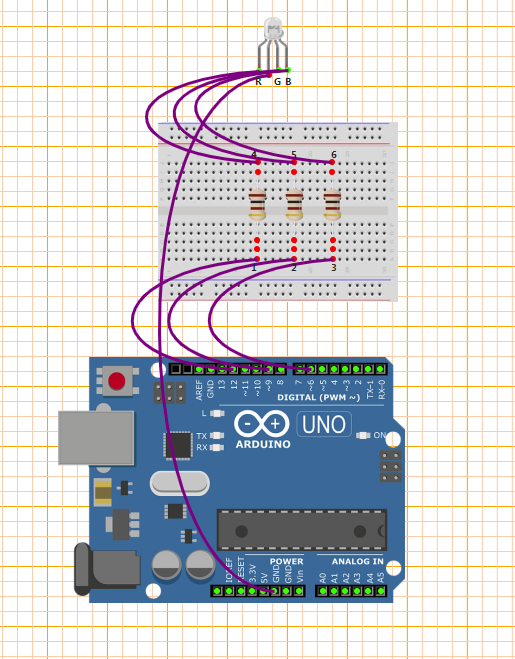
A circuit with an Arduino Uno, a common cathode RGB LED, and resistors (*Ballast resistors) is commonly used. The cathode is connected to ground, and the anodes are connected to digital pins through resistors.
*Ballast resistors:Resistors in Light Emitting Diode (LED) Circuits is often called a ballast resistor. The ballast resistor is used to limit the current through the LED and to prevent excess current that can burn out the LED. If the voltage source is equal to the voltage drop of the LED, no resistor is required.
Working of the Circuit:
1. Variable Declaration:
- PIN_RED, PIN_GREEN, and PIN_BLUE are defined to specify the digital pins connected to the red, green, and blue terminals of the RGB LED, respectively.
- red, green, and blue are integer variables used to hold the intensity values for each color.
2. Function Definition:
- setColor(int R, int G, int B) : This function takes three integer arguments representing the intensity values for red, green, and blue colors, respectively. It then uses the analogWrite() function to set the PWM (Pulse Width Modulation) values for each pin, thereby controlling the brightness of each color.
3. In the Setup Function:
- In the setup() function, pinMode() is used to configure PIN_RED, PIN_GREEN, and PIN_BLUE as output pins to control the RGB LED.
4. In the Loop Function:
- Calls setColor() function with the values of red, green, and blue to set the color of the LED.
- Waits for 1 second (delay(1000)).
- Repeats the process for different color combinations (red2, green2, blue2, red3, green3, blue3) with a delay of 1 second between each color change.
Overall, this code allows you to control the color of an RGB LED by adjusting the intensity of its red, green, and blue components individually. By varying these intensity values, you can create a wide range of colors. This experiment demonstrates how to manipulate RGB LEDs with Arduino, making it suitable for projects involving mood lighting, visual feedback, or decorative displays.