
Introduction
Apart from hardness causing ions, water has a lot of other ions mixed in it, for example, chlorides, sulphates, phosphates, nitrates, flurides, ions,etc., which add to the impurity of water. In order to check the purity of water, a range of experiments are carried our, among which hereby we are measuring the chloride content.
Generally water contains chloride ions (Cl–) in the form of NaCl, KCl, CaCl2 and
MgCl2. The concentration of
chloride ion in water >250 ppm, is not desirable for drinking purpose. The total chloride ion can be
determined by argentometric method (Mohr’s Method). In this method Cl– ion solution is directly
titrated
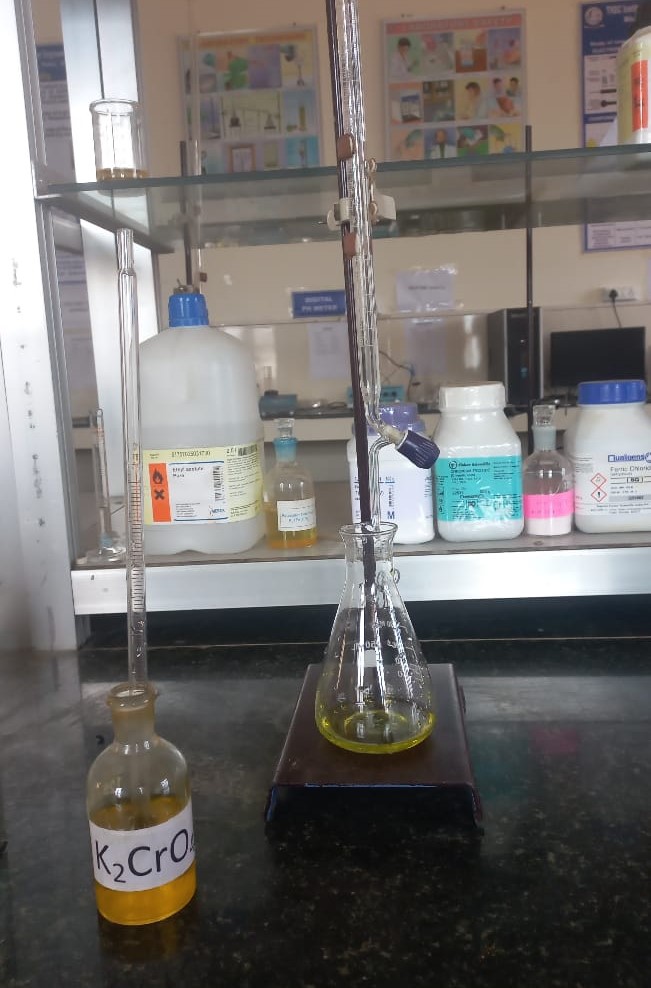
against AgNO3 using potassium chromate (K2CrO4) as an indicator. The reaction involved
in the titration is
given below:
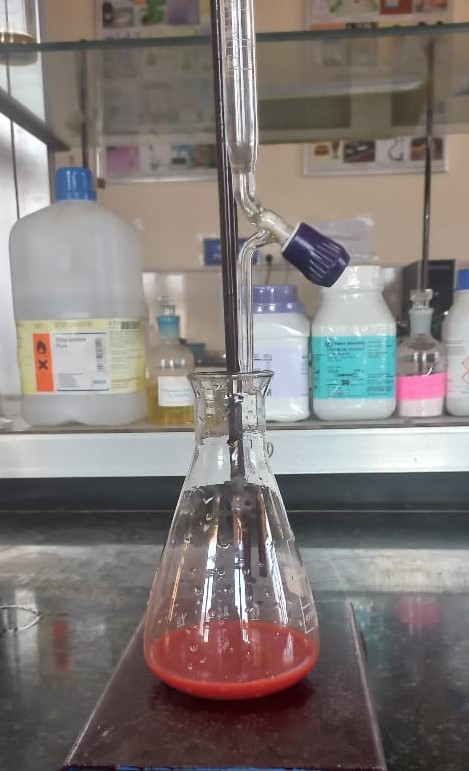
According to the above mentioned reactions, when all the Cl– ions are removed as AgCl, at the same point
yellow color of chromate ions changes to reddish brown color, and at the end point no further change is
observed in color of solution.
Applications:
1. Water Quality Monitoring
2. Environmental Monitoring
3. Industrial Processes
4. Desalination Processes
5.Corrosion Control